


Case Study
A leading European retailer approached us to assess the effectiveness of implementing FMR robotic receiving systems at distribution centers in several cities.
Project approach:
- A configurable solution was developed to enable rapid reconfiguration of warehouse topology, routes, and processes;
- AS-IS and TO-BE scenarios were built and tested on this solution for each warehouse.
Typical Warehouse Model
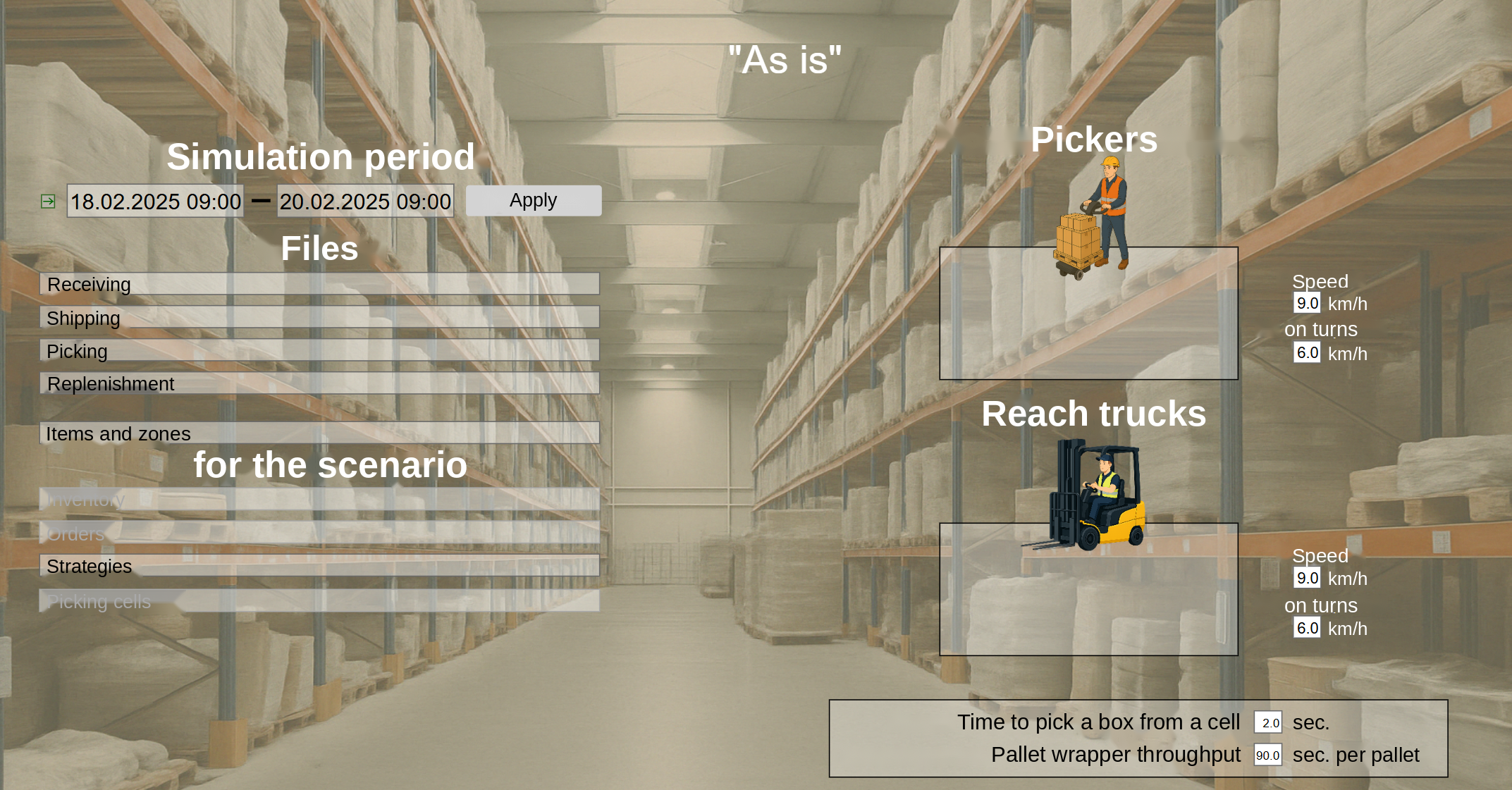
Let us look at the distribution center model developed for one of the locations within the project. The project was delivered in full accordance with the approach described above: first an "as-is" model was developed, followed by a "what-if?" model. Exported from the AnyLogic development environment, the model is a Java application. The user uploads receiving, replenishment, and shipping data as a set of CSV files selected on the main experiment screen, where equipment speed and timing characteristics can also be adjusted.
When running the model, the user can switch between a schematic animation of the model on the warehouse floor plan, a statistics screen, and an operations log, which is also saved as files for subsequent processing.
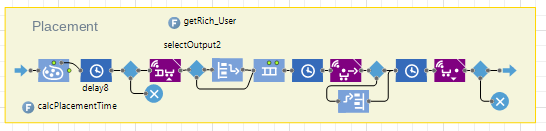
The model consists of the following key blocks:
- Goods receiving and unloading zones;
- Buffer zones for intermediate storage;
- Automatic pallet wrappers and packaging lines;
- Routes for robot and vehicle movement across the warehouse.

Each block is modeled with due account for time delays, operational standards, and throughput capacity. The integration of all elements provides a comprehensive view of warehouse operations and optimization opportunities based on scenarios with varying degrees of robotization.
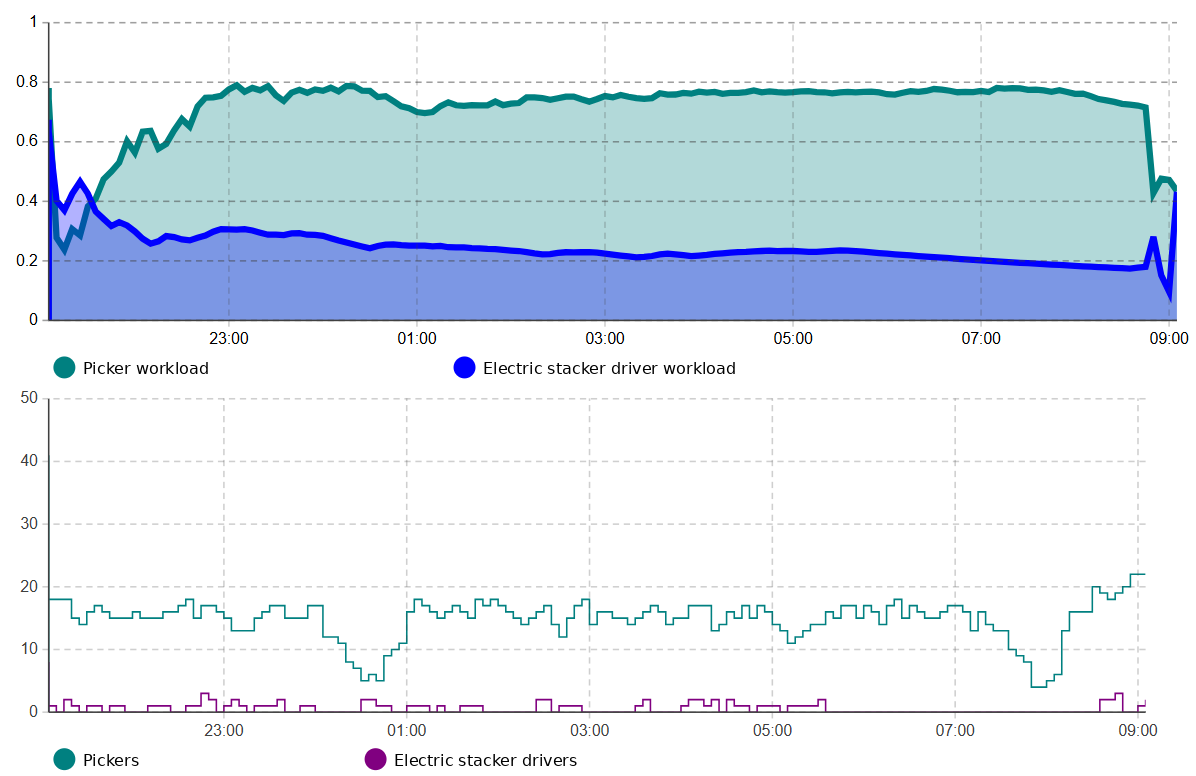
The model of the existing warehouse (the "as-is" option) was run on a fixed dataset from the WMS warehouse management system. This data included tables with receiving, shipping, order picking, and replenishment orders. To verify the model, the operations report it generated was compared with the actual operations history. In addition, data on personnel and equipment utilization and on shipping order delays obtained from model experiments were monitored. The model reproduced the real warehouse operations with an accuracy of at least 97%.
One of the implemented change scenarios ("what-if?") is the introduction of robotic areas for order picking. These areas represent a separate network for robot movement with one-way paths; this network connects to the main one via a dedicated buffer. On one side, a pallet is delivered on a cart by a picker; on the other side, it is collected for shipping by an FMR robot.
As a result of a series of model experiments, a specific network configuration for robot deployment at the distribution center was selected. Based on multiple computational experiment runs with varying amounts of equipment, the number of robots and charging stations, as well as the buffer size sufficient to meet the specified throughput targets, were determined.

Results
For each distribution center, a dedicated pair of AS-IS and TO-BE models was configured, the relevant data for the test period was loaded from the WMS system, and computational experiments were run.
- AS-IS warehouse models reproduce historical data at 96–99%;
- Based on the TO-BE models, the configuration of the robotic solution was determined;
- Through experiments with varying amounts of equipment, the number of robots and charging stations, as well as buffer sizes sufficient to meet the specified throughput targets, were determined.